Top Digital Marketing and SEO Services in Kansas City: Your Go-To Agency for Web Design, WordPress, and Custom Solutions
In a tight labor market, a job description alone rarely shows candidates why they should choose your business. Marketing to attract employees in a tight labor market in KC starts with clearly communicating what people value at work: flexibility, meaningful benefits, a positive culture, and opportunities to grow.
Offering these qualities is not enough. Candidates need to see how they shape the day-to-day employee experience. Clear, honest messaging can help your business stand out and give job seekers a realistic picture of what working with you could be like.
Learn how to promote flexible schedules and remote or hybrid options when the role allows, explain benefits and workplace culture, demonstrate respect, and show how employees can build their skills. These practical steps can help employers in Kansas City, Overland Park, Olathe, and Leawood present a more compelling opportunity to the people they want to reach.
Key Takeaways
- Describe flexible schedules and remote or hybrid options clearly so candidates can picture how work fits their lives.
- Show the full value of your offer by explaining benefits, wellness support, and workplace perks alongside compensation.
- Make your culture credible with specific examples of respect, employee input, and positive day-to-day working conditions.
- Highlight training and career paths to show candidates how they can build skills and grow with your organization.
- Strengthen recruitment with a mobile-friendly application, employee referrals, and social content tailored to the people you want to reach.
1. Flexible schedules and remote or hybrid work
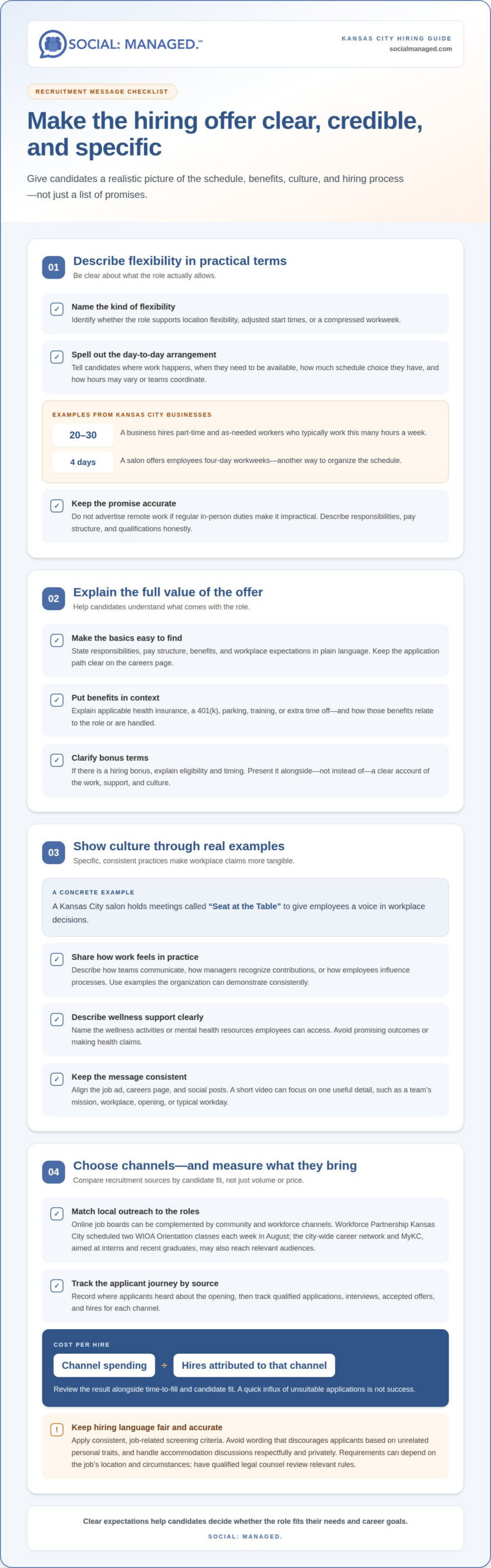
Flexible schedules and remote or hybrid options can strengthen a hiring offer in Kansas City. Start by identifying which roles can support location flexibility, adjusted start times, or compressed workweeks. Then describe the arrangement clearly in the job ad. Candidates need to know where the work happens, when they are expected to be available, and how much choice they have over their schedule.
Make flexibility specific rather than promising it vaguely. One Kansas City business hires part-time and as-needed workers who typically work 20-30 hours a week. A salon business offers employees four-day workweeks. These examples show different ways employers can organize work. Explain the actual schedule, whether hours vary, and how employees coordinate with teammates. Don’t advertise remote work if regular in-person duties make it impractical.
For recruitment advertising and hiring in Kansas City, Missouri, and Kansas, applicable rules depend on the job’s location and circumstances. Keep ads accurate, apply consistent job-related criteria, and have qualified legal counsel review requirements for each relevant jurisdiction.
Recruitment advertising costs in Kansas City vary by channel, campaign duration, audience, and whether a listing is sponsored. Compare spending with qualified applicants and hires instead of assuming the lowest-cost placement offers the best value.
Local outreach can combine online job boards with community and workforce channels. Workforce Partnership Kansas City scheduled two WIOA Orientation classes each week in August. Kansas City’s talent initiative includes a city-wide career network, while MyKC is geared toward interns and recent graduates. These channels can complement job postings when their audiences match the roles you need to fill.
Measure each channel with a simple tracking process. Record where applicants heard about the opening, then track qualified applications, interviews, accepted offers, and hires by source. Calculate cost per hire by dividing a channel’s recruitment spending by the hires attributed to it. Review the results alongside time-to-fill and candidate fit, so a quick influx of unsuitable applications does not look like success.
Misleading schedule claims and exclusionary wording can damage trust and create hiring risks. Describe flexibility, pay structure, responsibilities, and required qualifications accurately. Avoid language that discourages applicants based on personal traits unrelated to the work. Apply the same screening standards to every candidate, and handle accommodation discussions respectfully and privately. Clear expectations help candidates decide whether the role fits their needs and career goals.
Virtual Vocations’ survey of parents who work remotely was conducted in 2021, offering context when considering remote-work needs. The featured Kansas City businesses employ full-time, part-time, 1099, remote, and PRN workers. The featured salon hires most hairstylists as W-2 employees, although many initially aim to rent a booth and work as independent stylists. A unified recruitment system can help organizations speed up hiring through collaboration, job-listing approvals, interview scheduling, and compensation benchmarking.
Let’s Plan Your Recruitment Marketing Approach
2. Promoting workplace perks, benefits, and culture
A strong job ad makes the value of the offer easy to understand. State the role’s responsibilities, pay structure, benefits, and workplace expectations in plain language. On the careers page, provide a clear application path and specific examples of the employee experience. A school hiring a career counselor, for example, can describe its approach to student support and explain the position’s benefits without relying on generic claims.
Benefits can help candidates compare opportunities beyond base pay. Explain the total offer by describing applicable health insurance, a 401(k), parking, training, or extra time off. Avoid listing perks without context: say how training supports a role or how time off is handled. Flexible schedules can also influence candidate interest, especially when the advertised arrangement matches the job’s actual demands.
Pay and benefits both shape a candidate’s decision. A signing bonus may appeal to someone who would otherwise forfeit a bonus from their current employer. Make eligibility and timing clear in the ad, and describe compensation accurately. A hiring bonus can attract attention, but it cannot replace a credible explanation of daily responsibilities, support, and workplace culture.
Culture feels more tangible through examples than adjectives. A Kansas City salon gives employees a voice through meetings called “Seat at the Table.” That detail shows candidates how their input can shape workplace decisions. Employers can share comparable examples: how teams communicate, how managers recognize contributions, or how employees influence processes. Use only practices the organization can demonstrate consistently.
Short social media videos can introduce a mission, workplace, opening, employee, or typical workday. Keep each video focused on one useful detail, such as how a team collaborates. Consistent messaging across the job ad, careers page, and social posts helps candidates understand what the organization offers before they apply.
Wellness initiatives and mental health support can also strengthen an offer. Describe available support in concrete terms, such as the wellness activities or resources employees can access. Avoid promising outcomes or using health claims in recruitment messaging. Specific, accurate explanations help candidates decide whether the benefits meet their needs.
For a more coherent recruitment message, discuss how to present your workplace online. Aligning job ads, careers-page content, and social posts can make the candidate experience clearer from first impression through application.
To make comparisons more practical, employers can quantify the value of benefits alongside cash compensation, rather than leaving candidates to estimate what a package is worth. A total offer may include health insurance, a 401k, parking, training, and extra time off in addition to cash compensation. Hiring bonuses can attract employees; in a tight labor market, a signing bonus may also appeal to candidates who may forfeit a bonus from their current employer. Explain the terms plainly so candidates can weigh a bonus alongside the rest of the offer.
Relocation support can also form part of an offer. Wichita Promise Move offered relocation support to people living 75 miles outside Wichita, Kansas. Wichita Promise Move provides relocation participants with housing, cost-of-living stipends, and free tuition for specified aviation and process mechanic training. Describing such support clearly helps candidates compare the full offer, including benefits and training, with their needs.
3. Positive work environments
A positive work environment gives candidates a clearer picture of how people are treated after they are hired. A Kansas City business owner identifies compassion, respect, and a supportive environment as important for retaining employees. Turn those values into visible workplace practices. For example, managers can explain how they share feedback, handle disagreements, and recognize contributions during a typical workweek.
Leadership sets the tone through everyday decisions. A supervisor who listens when an employee raises a scheduling concern demonstrates respect more clearly than a slogan. Teams can set practical expectations for meetings, handoffs, and communication. In a warehouse, that might mean documenting shift updates so incoming staff receive the same essential information as departing colleagues.
Consistency matters. If one manager welcomes questions while another discourages them, the employee experience depends too heavily on the team. Set shared standards for one-on-one conversations, performance feedback, and responding to concerns. Managers can follow the same basic process: hear the issue, clarify what support is needed, agree on an action, and follow up.
Respect also shows in how organizations handle mistakes. A team member who reports an error should receive a constructive response focused on solving the problem and preventing a repeat. For example, a restaurant manager can review a missed order with the employee, identify where communication broke down, and clarify the handoff process. Blame rarely helps a team learn.
New hires form impressions quickly. A thoughtful first-week plan can introduce a colleague, explain team routines, and show where to find everyday resources. Assigning a go-to contact gives new employees a clear path for routine questions. A brief check-in after their first shifts helps leaders catch confusion before it turns into frustration.
Make the work environment tangible in recruitment messages. Instead of claiming “everyone is valued,” describe a real practice, such as regular team feedback or a clear process for raising concerns. Then make sure employees experience that practice consistently. Specific examples help candidates picture the workplace and current employees see whether public messages match daily behavior.
Employee feedback can help leaders identify gaps between the intended culture and the actual experience. Use team conversations or individual check-ins to ask what helps people do their work and where coordination breaks down. Close the loop by sharing what will change, who owns the action, and when the team will hear an update. Even when a request cannot be met, a direct explanation shows employees that their input was considered.
Positive workplace conditions support retention and strengthen an employer’s story. Employers in Kansas City, Overland Park, Olathe, and Leawood can make that story credible by aligning leadership behavior, team norms, and recruitment messages. When candidates hear consistent expectations during interviews and onboarding, they start with a more accurate picture of the work environment.
4. Professional development and growth opportunities
Professional development gives candidates a reason to picture a future beyond their first role. In recruitment messages, name the skills workers can build, the support available, and how development connects to potential next steps. A vague promise to “grow with us” leaves applicants guessing. A clear example, such as learning new equipment before taking on team responsibilities, makes the opportunity easier to understand.
Kansas City’s talent initiative includes a city-wide career network, and its MyKC program is geared toward interns and recent graduates. Employers can use these local pathways to connect with emerging talent. Make entry requirements and learning opportunities clear, then explain how early-career workers can build experience through real responsibilities and guidance from colleagues.
Training works best when it connects to employees’ actual work. Identify the skills a role requires, then show how onboarding, coaching, or structured practice helps workers develop them. For example, a customer-service employee might learn product knowledge first, then take on more complex customer needs with manager support. Concrete learning steps help candidates assess whether the role fits their career goals.
Career paths should explain progression without promising automatic promotion. Outline the capabilities associated with broader responsibilities, and describe how performance or skills are assessed. A Kansas City salon is developing training and career paths alongside employee benefits. That example shows how employers can make development part of the job offer, rather than an informal possibility raised only after hiring.
Managers can make development a practical routine. During check-ins, discuss a worker’s current strengths, one skill to build, and a relevant project or learning resource. Follow up by reviewing progress and adjusting the plan as responsibilities change. These conversations give employees a clearer view of growth while helping leaders connect individual learning with the organization’s needs.
Show candidates how development works at different stages. An intern might receive project feedback, while an experienced worker could learn a new process or mentor a colleague. Explain these examples in job ads and interviews, using only opportunities the organization can support. Specific descriptions help applicants understand what growth means in the role.
When recruitment clearly highlights training and advancement, candidates can evaluate more than the immediate duties. Employers in Kansas City, Overland Park, Olathe, and Leawood can strengthen their message by connecting each opening to practical learning, visible support, and realistic next steps. That clarity helps workers decide whether the position aligns with the career they want to build.
5. Which recruitment marketing strategies work best for small businesses?
Small businesses can focus on a few channels they can manage consistently. Start with a clear job page, employee referrals, and social posts that show what the role involves. For example, a neighborhood repair shop can share an opening through its own channels and invite current employees to recommend qualified candidates. A small referral bonus can make that invitation more meaningful. A focused approach to marketing to attract employees in a tight labor market in KC keeps these efforts clear and manageable.
Make the application page easy to use before investing in more promotion. Present the job title, core duties, qualifications, and application steps in a clear order. Test the process on a smartphone and tablet, then remove unnecessary friction. A mobile-friendly experience lets job seekers apply on a device they already use, rather than abandoning a process that works only on a computer.
Social media works best when the platform and message fit the audience. More than half of job seekers use LinkedIn to search for new opportunities. LinkedIn can help reach professionals, while TikTok or Instagram may suit outreach to recent graduates. A short post can show a real task, introduce a team member, or explain what a typical shift involves.
Employee posts can extend an opening’s reach beyond the company’s own accounts. Give employees accurate role details and a direct way to share the vacancy with their networks. A personal post from a staff member can explain why the work matters, while the official job page provides consistent duties and application instructions. Keep participation voluntary and the message truthful.
A branded careers page helps a small business present a recognizable employer identity. Use the same logo, tone, and workplace details across the careers page and job listings. Include practical information, such as team responsibilities or how a new hire is supported. This gives candidates a coherent view of the business before they apply.
Online job boards can provide a cost-effective way to reach a broad pool of candidates. Sponsored listings may receive more prominent placement or proactive matching with qualified job seekers. Choose placements based on the role and audience, then track applications and hires by source. If a listing brings clicks but few qualified applicants, revise the job description or channel mix.
For a small employer, an effective recruitment plan connects one accurate job page with a few targeted channels. Set a review point for each opening, compare qualified applications across sources, and adjust the message when the right candidates are not responding. Consistent marketing to attract employees in a tight labor market in KC helps candidates encounter a clear, credible picture of the opportunity.
Social: Managed: Search Engine Optimization
Social: Managed helps employers in Kansas City, Overland Park, Olathe, and Leawood strengthen the online presence behind their recruitment efforts. Our digital marketing services can align search visibility, social media messaging, and Google Ads with the roles and workplace story a business wants candidates to find. This can help when openings are hard to promote through existing channels or recruitment messages feel inconsistent across platforms.
Clear, accurate content helps prospective employees understand an organization before applying. We support that visibility through Search Engine Optimization and Social Media Management, with strategy shaped around an employer’s goals and audience. These efforts complement the practical hiring approaches described above; they do not replace a clear role, credible workplace practices, or a straightforward application process.
Build a Recruitment Message That Grows With Your Business
Hiring needs change as teams expand, roles evolve, and priorities shift. Treat your recruitment message as an ongoing part of your employer brand, not a one-time job post. A focused strategy for marketing to attract employees in a tight labor market in Kansas City can keep the way you present opportunities aligned with the people you want to reach.
Social: Managed can support that visibility through Digital Marketing, Search Engine Optimization, and Social Media Management. These services can help businesses bring their hiring message into the online channels where candidates encounter their brand. The right approach depends on the organization’s goals, audience, and existing digital presence.
Start with a clear view of the roles you need to fill and the experience you want candidates to understand. Then make each online touchpoint reinforce that message. A consistent, credible presence gives your business a stronger foundation for future hiring.
.
Frequently Asked Questions
What does employee recruitment marketing include?
Employee recruitment marketing is the communication that helps potential applicants discover and understand an organization as a place to work. It can include employer-brand messaging, job content, careers-page information, and social media posts that reflect the actual employee experience. For an employer hiring in Kansas City, Overland Park, Olathe, or Leawood, consistent details across these touchpoints help candidates recognize the same organization and expectations.
How can employers attract candidates in a tight labor market?
Employers can attract candidates by making the opportunity clear, relevant, and easy to pursue. Describe the work honestly, explain what success in the role looks like, and remove avoidable friction from the application process. For example, a Kansas City business hiring for a customer-facing position can show a realistic task from the role and explain how applicants will hear about next steps. A timely, respectful candidate experience reinforces the message.
What are typical recruitment advertising costs in Kansas City?
Costs vary by channel, campaign duration, audience, and whether a listing is sponsored. Compare spending with qualified applicants and hires instead of choosing solely by the lowest price.

Ready to get started? Reach out to Social: Managed. online, or call us at 866-324-9700. We manage your company’s social life so you can have one! You don’t need complicated packages. We listen to your goals.
Then we design and manage SEO, social media, ads, websites, and email campaigns built to deliver results. No jargon. No guesswork. Just real growth from a team that cares. Ready to get rolling? Follow Social: Managed. on Facebook for a peek into our social life.